






A Comprehensive Guide To Poker Chip Weights and Materials.

The weight and material of a poker chip affects everything — how it sounds when it hits the felt, how it stacks, how it shuffles in your hand, and how long it lasts. If you're ordering custom poker chips for a home game, corporate event, golf outing, or branded giveaway, understanding the differences between clay, ceramic, and composite chips helps you choose the right one for your use case and budget. Here's what you need to know.
Clay Composite (11.5g)
Clay composite is the most widely used material for personalized poker chips. These chips are made from a blend of clay, sand, chalk, and other materials, with a thin metal insert in the center that adds weight and a satisfying heft. At 11.5 grams, they sit right in the sweet spot — heavy enough to feel substantial, light enough to shuffle and stack smoothly.
The surface has a slightly rough, textured grip that makes stacking easy and prevents chips from sliding on smooth tables. This is the chip most people picture when they think of poker — it's the standard for custom poker chip sets, drink tokens, poker chip golf ball markers, and branded promotional chips.
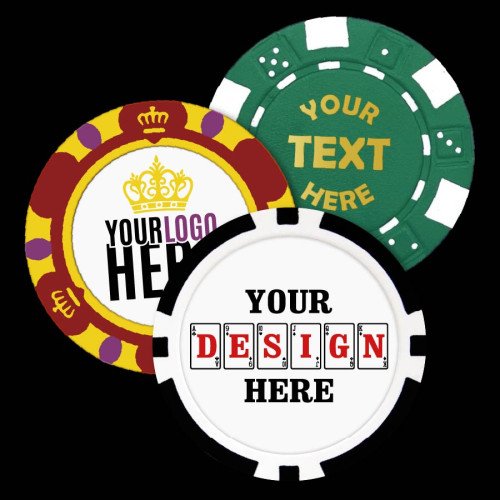
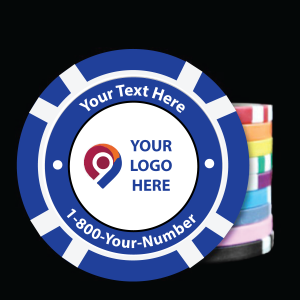
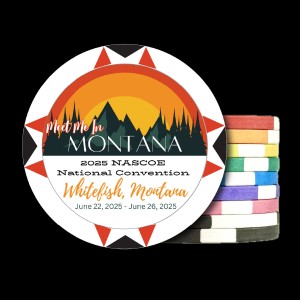
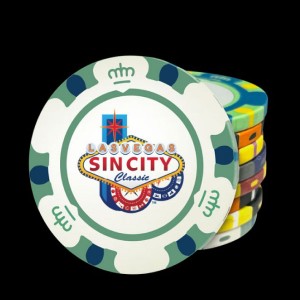
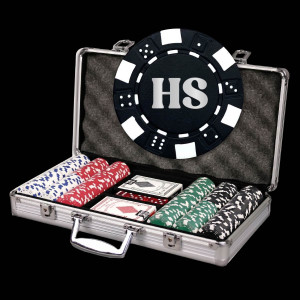
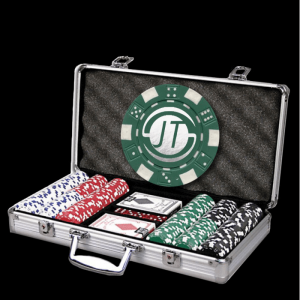
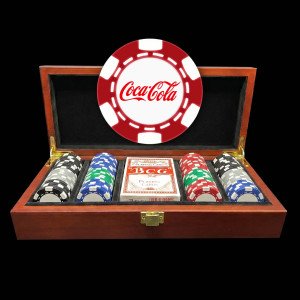
Clay composite chips can be customized with custom inlay (full-color label sealed under a clear cover) or hot stamp (single-color metallic foil pressed into the surface). For a detailed comparison of print options, see our guide to printing on poker chips.
Weight: 11.5g | Feel: Textured, grippy | Starting price: $0.19/chip (hot stamp) to $0.50/chip (inlay)
Ceramic (10g)
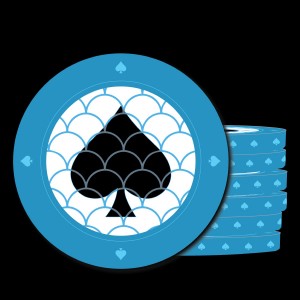
Ceramic poker chips are the premium option. They're made from a compressed ceramic composite — no metal insert — with a smooth, slightly textured surface that feels completely different from clay. At 10 grams, they're lighter than clay composites, which some players prefer for the way they slide and riffle.
The biggest advantage of ceramic is the print. Your design is applied directly onto the chip surface (or sublimated into it), allowing full-color, edge-to-edge graphics that wrap across the face and even onto the rolling edge. There's no label or inlay — the print IS the chip surface. This produces the sharpest, most professional-looking result and is the same technology used in many professional poker rooms.
Ceramic chips are ideal for premium branded gifts, executive poker sets, custom tournament chips, and any project where visual impact matters most. They're also the material used for ceramic golf ball markers.
Weight: 10g | Feel: Smooth, textured surface | Starting price: ~$0.79/chip at volume
Premium Clay (13.5g – 14g)
For players who want the heaviest, most substantial chip available, 13.5g and 14g clay chips deliver. These are thicker, denser versions of the clay composite with a more pronounced metal insert. The extra weight makes them feel like something you'd find on a high-stakes table — they thud instead of click when they hit the felt.
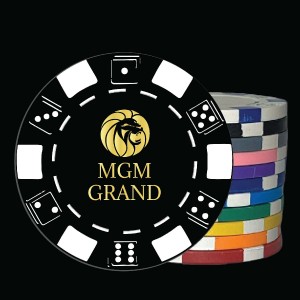
Heavy clay chips are popular with serious home game players, poker clubs, and anyone building a dedicated poker room. They're available in a range of edge spot patterns and can be customized with hot stamp or inlay printing. For a deep dive into clay poker chips specifically, our dedicated guide covers everything.
Weight: 13.5–14g | Feel: Heavy, dense, premium | Best for: Serious home games, poker rooms
Materials & Weights Compared
| Feature | Clay Composite (11.5g) | Ceramic (10g) | Premium Clay (13.5–14g) |
|---|---|---|---|
| Weight | 11.5 grams | 10 grams | 13.5–14 grams |
| Diameter | 39mm (standard casino) | 39mm (standard casino) | 39mm (standard casino) |
| Surface Feel | Textured, slightly rough | Smooth with micro-texture | Textured, slightly rough |
| Metal Insert | Yes | No | Yes (larger) |
| Print Methods | Custom inlay, hot stamp | Direct print, sublimation | Custom inlay, hot stamp |
| Full-Color Printing | Yes (inlay) | Yes (direct / edge-to-edge) | Yes (inlay) |
| Edge-to-Edge Graphics | No (center inlay area) | Yes | No (center inlay area) |
| Durability | High | Very high | High |
| Best For | Most orders: sets, gifts, promos, tokens, markers | Premium branding, executive gifts, tournaments | Serious home games, poker rooms |
| Starting Price | $0.19/chip (hot stamp) | ~$0.79/chip | Varies by style |
Want a side-by-side look at all chip styles? Our 4 types of poker chips page shows every option with photos.
Common Myths About Poker Chip Weight
Myth vs. Reality
"Casino chips are 11.5 grams." — Actually, most professional casino chips weigh between 8.5 and 10.5 grams. The 11.5g standard comes from the home-game chip market, where manufacturers add a metal insert for extra weight. Both feel great — they're just different.
"Heavier chips are higher quality." — Weight and quality are separate things. A well-made 10g ceramic chip is more durable and prints sharper than a cheap 14g plastic chip. What matters is the material, the manufacturing process, and the print method — not the number on the scale.
"Clay chips are made of pure clay." — No poker chip is 100% clay. All "clay" chips are actually a composite blend of clay, sand, chalk, and other materials. Pure clay would be too brittle. The term "clay composite" is the accurate description, and it's what gives the chip its characteristic texture and sound.
Which Chip for Your Use Case
Home Poker Games
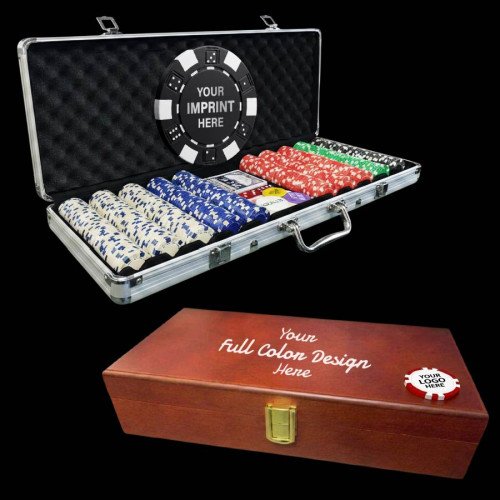
11.5g clay composite in a set with a case. The most popular weight for regular game nights.
Shop Sets →Corporate Events
10g ceramic for premium branding with edge-to-edge logos. Or 11.5g clay inlay for full-color at a lower cost.
Design Yours →Golf Ball Markers
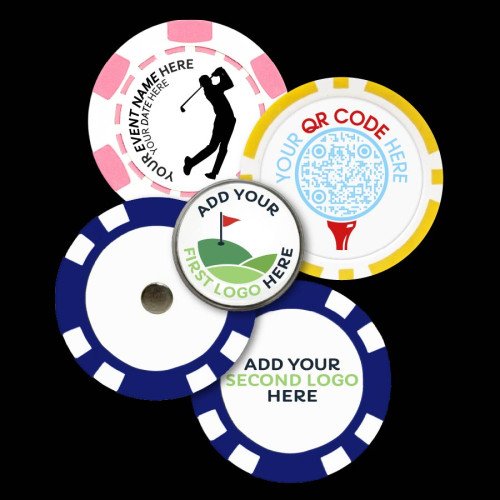
11.5g clay composite is the standard — weighted enough to sit flat on the green, light enough for your pocket.
Shop Markers →Drink Tokens
11.5g clay composite with hot stamp — affordable, durable, and feels like a real casino chip in your guest's hand.
Shop Tokens →Personalized Gifts
11.5g inlay in a custom set. Add names, dates, or inside jokes. Pair with custom playing cards for the full package.
Shop Gift Sets →Tournaments & Poker Rooms
10g ceramic for pro-level play, or 13.5–14g clay for the heaviest, most premium feel at your tables.
Shop Ceramic →Setting Up Denominations?
Once you've chosen your material and weight, you'll need to decide on chip colors and values for your game. Different colors typically represent different dollar amounts. Our poker chip denominations guide walks through standard color assignments and how to set up your chip distribution by game type and player count.
Find Your Perfect Chip
Clay, ceramic, or premium clay — all custom printed with your logo. Free setup, free proof, ships in 1–5 business days.
Design Your Chips Now